
English| EUR
Suggested for you
More currencies
Choose a language
The Murray River forms the backbone of southeastern Australia's environment and economy, stretching 2,508 kilometres from the Australian Alps to the Southern Ocean. Its basin covers one-seventh of the continent and supplies water to more than three million people. Understanding why this river matters reveals the interconnected systems that depend on its flow.
Quick answer
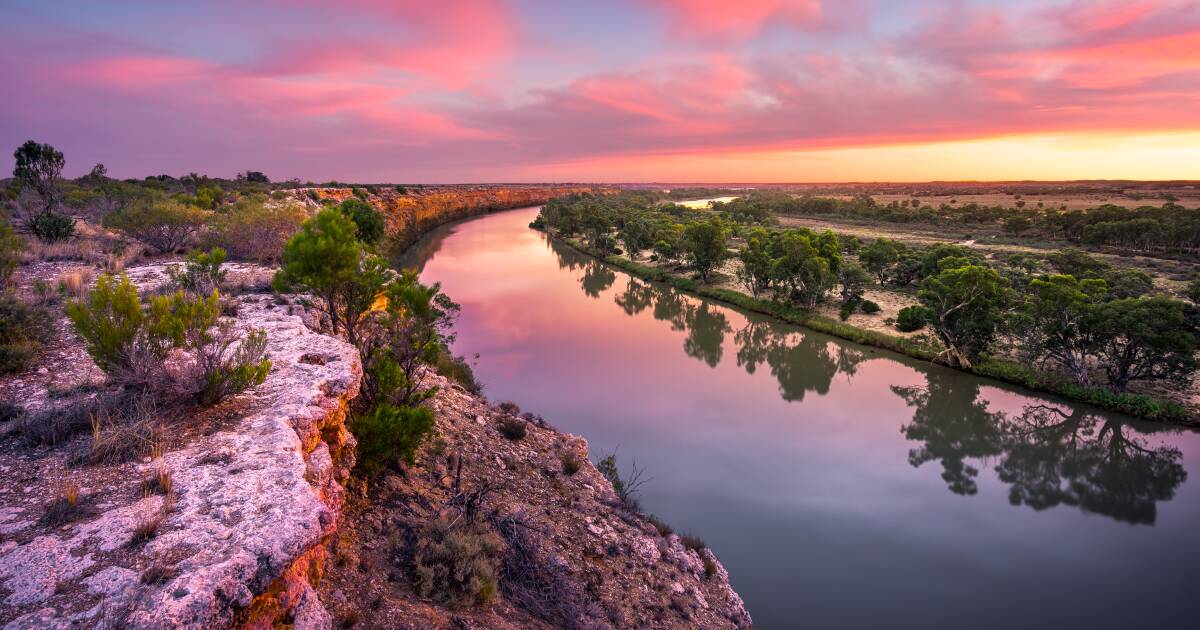
The importance of the Murray River stems from its role as Australia's most critical freshwater source, supporting over 40 percent of the nation's agricultural production, sustaining internationally significant wetlands including sixteen Ramsar sites, and holding profound cultural significance for First Nations peoples who have lived along its banks for more than 40,000 years. The river basin generates over 40 billion dollars in annual agricultural output while providing drinking water to Adelaide and dozens of regional towns. Its managed flow regulates ecosystems from alpine streams to coastal lagoons.
The Murray River delivers 1.76 trillion litres to South Australia in an average year, though that figure has fallen by more than one-third since European settlement due to irrigation extraction and climate shifts. The basin produces three-quarters of Australia's irrigated crops and nearly half of its fruit, with citrus groves, vineyards, and dairy operations dependent on regulated water allocations managed by the Murray-Darling Basin Authority. Without this river, the agricultural economies of New South Wales, Victoria, and South Australia would collapse. Ecologically, the significance of the Murray River extends beyond its flow volume. The system supports more than fifty native fish species, including the Murray cod, which can live for over half a century and once grew to 1.8 metres. Red gum forests line the banks, their survival tied to seasonal flooding patterns that have been disrupted by locks, weirs, and upstream dams. Sixteen wetlands along the river hold Ramsar designation, recognising their international importance for migratory waterbirds that travel from Siberia and Japan to breed in the Coorong and Barmah-Millewa forests. These wetlands function as carbon sinks, water filters, and nurseries for aquatic species. First Nations groups including the Ngarrindjeri, Yorta Yorta, and Wiradjuri hold the river as a living ancestor, not merely a resource. Middens, fish traps, and ceremonial sites along the banks record continuous occupation spanning tens of millennia. The river's English name honours British colonial secretary George Murray, but it carries dozens of Indigenous names tied to creation stories and seasonal cycles. Contemporary water management increasingly incorporates Indigenous knowledge, recognising that traditional burning and flow practices maintained ecological balance long before European irrigation schemes. Today the Murray River importance guide centres on balancing extraction with environmental flow. The basin plan, implemented in 2012, aims to return 2,750 gigalitres annually to the river by purchasing water rights from irrigators and upgrading infrastructure to reduce losses. Critics argue the target is insufficient to restore wetland health, while some farming communities resist further reductions. The river's future depends on this negotiation between economic output, ecological resilience, and cultural continuity.
“The Murray River basin generates over 40 billion dollars in annual agricultural output while sustaining sixteen internationally recognised wetlands.”
The Murray River serves as the primary lifeblood of southeastern Australia, acting as the foundation for the nation's agricultural prosperity and regional biodiversity. As the central artery of the Murray-Darling Basin, it provides essential water resources that support diverse ecosystems and large-scale primary production.
Australia's food bowl
Cross-border waterway
Home to 2.4 million people
Unique native biodiversity
Internationally significant wetlands
Agricultural water consumption
The best arrival window is 08:00–10:00, as this period offers the best morning light and calmer water conditions for sightseeing. Planning your visit during these hours allows for optimal observation of the river’s environmental and economic significance.
Mild temperatures (15°C–25°C). Stable water levels support diverse river activity.
Pleasant temperatures (16°C–26°C). Seasonal flows remain consistent for observation.
—
Best morning light and calmer water conditions for sightseeing.
Verdict: The best time to visit is during the shoulder seasons of April or October, specifically within the 08:00–10:00 arrival window.
For at least sixty thousand years, the Murray River sustained the Ngarrindjeri, Yorta Yorta, and Wadi Wadi peoples, who managed fish traps, seasonal camps, and trading routes along its length. The waterway formed the backbone of a continent-wide exchange network, carrying ochre, tools, and ceremony across hundreds of kilometres. European explorers Hume and Hovell reached the upper Murray in 1824, followed by Charles Sturt's 1830 expedition downstream to Lake Alexandrina. Within two decades, the river had become a commercial artery for wool and wheat, with paddle steamers linking remote stations to the port at Echuca. The importance of the Murray River grew acute after Federation in 1901, when three states claimed overlapping water rights and drought exposed the inadequacy of unregulated extraction. The River Murray Waters Agreement of 1915 created Australia's first interstate water-sharing compact, a model later adopted across the basin. Construction of the Hume Dam began in 1919 and concluded in 1936, transforming seasonal variability into year-round irrigation supply for the Riverina and Sunraysia districts. Post-war soldier settlement schemes expanded the irrigated footprint, but by the 1970s salinity and algal blooms signalled ecological overshoot. The Murray-Darling Basin Authority was established in 2008 to implement basin-wide limits on extraction, a reform tested by the Millennium Drought and contested in regional towns dependent on irrigation allocations. Today, the river's significance as a lifeline for agriculture, urban water supply, and remnant wetlands remains undisputed. Visitors walking the riverbanks at Echuca still see the weathered timber wharves and restored paddle steamers that testify to the waterway's nineteenth-century heyday, while the weir pools and lock chambers built in the 1920s continue to regulate flow for downstream users.
Indigenous nations establish fish traps, seasonal camps, and transcontinental trade routes along the Murray corridor.
Hamilton Hume and William Hovell become the first Europeans to encounter the upper Murray during their overland expedition.
Charles Sturt navigates the Murray downstream to Lake Alexandrina, opening the basin to pastoral expansion.
The first paddle steamer, Lady Augusta, begins commercial service, linking wool stations to river ports.
The River Murray Waters Agreement establishes Australia's first interstate water-sharing compact between New South Wales, Victoria, and South Australia.
Completion of Hume Dam provides regulated irrigation supply to the Riverina and Sunraysia districts, enabling large-scale agriculture.
The Murray-Darling Basin Authority is formed to enforce sustainable extraction limits and restore environmental flows across the basin.
Public access to the Murray River is available at all times throughout the week. Visitors may explore public areas along the river bank whenever they choose.
Everything you need to know about importance of the murray river
The river serves as a vital artery for the nation, providing essential water resources and supporting diverse ecosystems. Understanding the importance of the murray river highlights its role as a cornerstone of Australian geography and history.
The river supports critical biodiversity including unique flora and fauna within the Murray-Darling Basin. Healthy wetlands and river red gum forests rely on consistent water flows for their survival.
The river provides water for irrigation across one of the country's most productive food bowls. Recognizing the importance of the murray river helps farmers and communities manage water usage sustainably.
Yes, public areas along the river are open for visitors to explore at their leisure. Visitors can enjoy walking tracks and picnic spots along the banks throughout the week.
The best arrival window is 08:00–10:00 to experience calmer water conditions and favorable morning light. Arriving during this time is ideal for photography and sightseeing.
There is 0 AUD entrance fee for public areas along the river. Access to these spaces is provided free of charge for the community.
No, access to public areas is free for everyone. You do not need to pay a fee to walk along the riverbanks.
Tourism is a major pillar of the regional economy, with many visitors enjoying cruises and recreational activities. Scenic boat tours allow guests to appreciate the scale and natural beauty of this major waterway.